If you are comparing jellyfish lighting vs govee, you are probably not just shopping for lights. You are deciding how permanent you want the upgrade to feel, how polished you want the finished look, and how much time you want to spend managing it after installation. That decision matters more than most homeowners expect because these systems can either look like a clean architectural feature or like a gadget added after the fact.
For many homes, both products can create impressive color effects, holiday displays, game day themes, and everyday accent lighting. The difference is in how they are built, how they are installed, and how they hold up when you want a finished exterior rather than a temporary tech project.
Jellyfish Lighting vs Govee: The biggest difference
The clearest gap in jellyfish lighting vs govee is that Jellyfish Lighting is designed first as a professionally installed permanent lighting system, while Govee is often chosen by homeowners looking for a more accessible, product-based smart lighting option. That one distinction affects almost everything else – appearance, durability, customization, service, and long-term value.
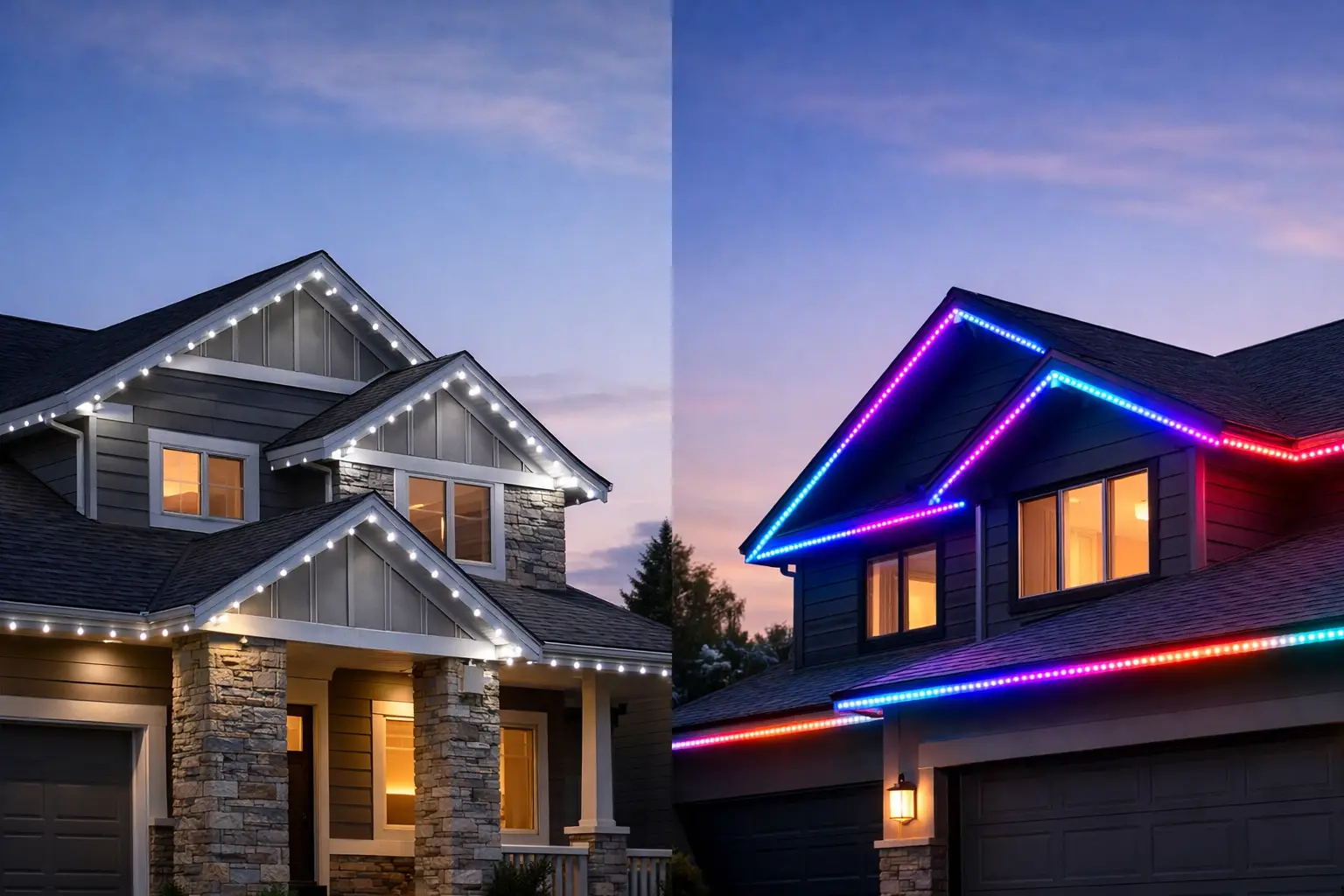
Jellyfish Lighting is typically integrated into the home with custom aluminum tracks that help conceal the lights during the day. When the job is done well, the system reads as part of the architecture. That is a major selling point for homeowners who care about curb appeal and do not want visible hardware distracting from the roofline.
Govee permanent outdoor lighting can absolutely produce fun and attractive effects, and for some households it checks the right boxes. It is generally more DIY-friendly and more budget-conscious on the front end. But the finished look is usually less custom, and that matters when the goal is a premium exterior upgrade rather than just colorful lighting.
How each system looks on the house
This is where many buying decisions are really made.
Jellyfish Lighting tends to win on daytime appearance. Because the system is installed with a track designed to blend with the structure, it is built for homeowners who want the lights available year-round without looking like they are there year-round. On higher-end homes, brick facades, detailed trim, and clean rooflines, that hidden look often makes a big difference.
Govee is more visible. That does not automatically make it a bad option. Some homeowners are perfectly comfortable with a more noticeable setup if they care most about nighttime effects and app control. But if you are trying to preserve a refined exterior during the day, visibility can become a drawback.
This is especially true on homes where exterior details already carry a lot of the visual weight. If the trim, stonework, and landscaping are doing the heavy lifting, a lighting system should support the design, not compete with it.
Installation experience and what that means later
A lot of articles treat installation as a one-time event. In reality, installation affects performance for years.
Jellyfish Lighting is usually part of a professional design and install process. That matters because every roofline, soffit, peak, and transition needs planning. A trained installer can space fixtures properly, route components cleanly, and match the system to the architecture instead of forcing the house to fit the product.
Govee appeals to people who want a faster path to getting lights up. For straightforward homes and handy homeowners, that may be enough. But there is a trade-off. DIY installation often leads to inconsistent spacing, more visible components, or placement that looks good from one angle and uneven from another.
Professional installation also matters when you want accountability. If something needs adjustment, troubleshooting, or replacement, having a licensed and insured local company involved is very different from trying to solve everything yourself after the fact.
Brightness, effects, and everyday use
Both systems can do much more than holiday lighting. They can set a warm everyday glow, support security through added illumination, and change colors for birthdays, graduations, or sports weekends.
Govee has built a strong reputation in the smart lighting space because it offers a wide range of effects and user-friendly controls. If your priority is app-driven customization and playful scene options, that can be attractive. It often feels consumer-tech first, which some users love.
Jellyfish Lighting also offers broad color control and programmability, but the appeal is different. It is usually less about novelty and more about having a refined, reliable lighting system that can handle both subtle and bold displays. A well-designed Jellyfish setup can look understated on a Tuesday night and fully celebratory on a holiday weekend without feeling like two different products.
That balance matters for homeowners who want flexibility but do not want the house to look overly flashy every time the lights are on.
Durability and weather exposure
Outdoor lighting in the Midwest has to deal with real weather. Heat, freezing temperatures, moisture, wind, and seasonal swings are not minor details. They are part of the ownership experience.
In jellyfish lighting vs govee, durability often comes down to system design and installation quality as much as the brand itself. A professionally installed system with components intended for permanent exterior use generally has an advantage over a setup that depends more heavily on adhesive placement, exposed runs, or less tailored mounting.
Jellyfish Lighting is built around permanent installation, and that usually aligns better with homeowners who want a long-term improvement. Govee can still be a workable solution, but the question is whether you are comfortable with a more product-driven setup on a home that faces full seasonal exposure year after year.
If you plan to stay in the house for a while, durability should carry more weight than the initial price tag. Replacing parts, reworking placement, or living with a result you do not love can erase those early savings pretty quickly.
Cost versus value
Govee often gets attention because the upfront cost is lower. That is real, and for some buyers it is the deciding factor. If your main goal is adding colorful outdoor lighting without stepping into a premium installation investment, Govee may fit the budget better.
Jellyfish Lighting usually costs more because it is not just a box of lights. You are paying for a custom-fitted system, a cleaner finish, and the labor and expertise required to install it correctly. For many homeowners, that higher cost buys a more architectural result and a more permanent improvement to the property.
So the better question is not just which one is cheaper. It is which one delivers the kind of value you care about.
If you want a fun lighting product, Govee can make sense. If you want a polished exterior feature that feels built into the home, Jellyfish Lighting usually justifies the investment more clearly.
Who should choose Jellyfish Lighting?
Jellyfish Lighting is usually the better fit if you care strongly about curb appeal, want a hidden daytime appearance, and prefer professional installation over trial and error. It also makes more sense when the home itself is a long-term investment and you want the lighting to feel like part of the property, not an accessory.
This option tends to appeal to homeowners who are already investing in landscaping, exterior upgrades, patio spaces, or architectural improvements. In that setting, the lighting needs to match the quality of the rest of the home.
Who should choose Govee?
Govee can be a good choice if budget is the biggest factor, if you enjoy smart-home style product setup, or if you are comfortable with a less custom appearance. It can also fit homeowners who want strong visual effects without committing to a more premium professional system.
That does not mean it is only for temporary thinking. It just means the purchase logic is different. You are usually choosing flexibility and lower entry cost over a more tailored finish.
The real decision for most homeowners
When people compare jellyfish lighting vs govee, they are often comparing two different priorities. One is a permanent exterior improvement. The other is a smart lighting product that happens to work outdoors.
Neither priority is wrong. But they are not interchangeable.
If your home is the kind of place where clean lines, custom details, and visible quality matter, Jellyfish Lighting is usually the stronger fit. If your goal is to get colorful control at a lower upfront cost and you are comfortable with some compromise in finish, Govee may be enough.
For homeowners in Northwest Ohio and Southeast Michigan, where weather, curb appeal, and long-term property value all matter, it helps to look beyond features on a product page and think about the finished result on your actual house. That is where the right choice becomes much clearer.
If you want lighting that feels intentional every day of the year, not just impressive the night you turn it on, start with the option that matches the way you want your home to look when the lights are off too.