That moment when you are dragging out tangled holiday lights in freezing weather is usually when permanent lighting starts to make a lot of sense. A smart jellyfish lighting buyer guide should help you look past the sales pitch and focus on what actually matters once the system is on your home for years, not just one season.
Jellyfish Lighting has become a popular choice for homeowners who want clean daytime curb appeal, flexible color control, and a professionally installed system that can handle holidays, game days, backyard gatherings, and everyday accent lighting. But not every property needs the same setup, and not every quote is built the same way. The right decision comes down to your roofline, your goals, your budget, and the quality of the installer standing behind the work.
What a jellyfish lighting buyer guide should cover
If you are comparing permanent lighting systems, the first question is not really which color looks best. It is whether the system will look discreet in daylight, perform reliably in your climate, and fit the way you want to use your home.
For most homeowners, permanent outdoor lighting is part convenience and part upgrade. You stop climbing ladders every season, but you also gain a finished, custom look that adds to the home year-round. That is why it helps to think beyond holidays. A good system can highlight rooflines, create subtle evening ambiance, improve visibility around key entry points, and make your home feel more polished from the street.
The strongest buying decisions usually come from asking a few practical questions early. Do you want lighting mostly for holidays, or do you also want soft architectural lighting throughout the year? Are you trying to make a two-story front elevation stand out, or do you want a full-wrap effect around the home? Do you care more about app control and color options, or about having a low-profile track that nearly disappears during the day? Those answers shape the right system and the right layout.
Daytime appearance matters more than most buyers expect
One of the biggest differences between temporary lights and a professionally installed Jellyfish Lighting system is how it looks when it is off. If the track is installed well and color-matched properly, the system should blend into the roofline rather than call attention to itself.
This is where custom installation matters. Homes are not built from a standard template. Soffits, fascia details, peaks, gables, dormers, and trim colors all affect placement. A clean installation follows the architecture and keeps the finished look intentional. A rushed installation can make even a premium product feel like an afterthought.
For homeowners who care about curb appeal, this is not a small detail. Permanent lighting should improve the home in December and in July. If you are evaluating proposals, ask how the installer plans around your specific roofline and how closely the components can be matched to the exterior.
Features worth paying for and features that depend on your goals
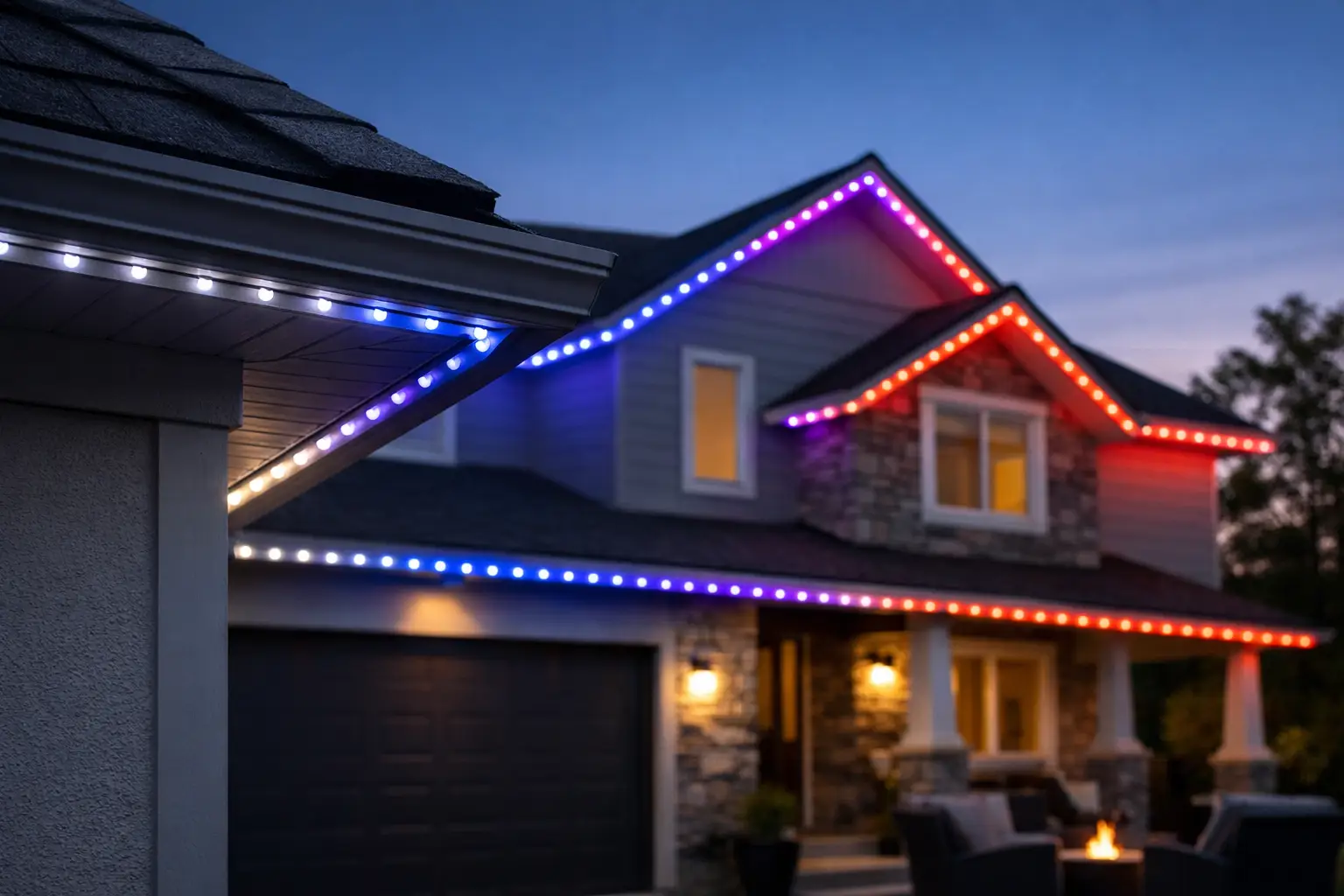
Jellyfish Lighting is attractive because it combines appearance with flexibility. You can shift from warm, understated lighting to full holiday color without changing the hardware. That said, not every feature carries the same value for every buyer.
Color control and programming are obvious selling points, especially if you enjoy celebrating different seasons, school events, or sports teams. Preset patterns and scheduling can save time and make the system easy to use. But if your main goal is simple elegance every evening, you may not need to build your decision around the most advanced effects.
Brightness is another area where more is not always better. A home needs enough output to create visible impact, but too much brightness can look harsh or distracting in a neighborhood setting. The best design balances visibility with restraint. That is especially true on homes with detailed architecture, where a softer effect often looks more upscale than a loud one.
Durability also deserves real attention. In Northwest Ohio and Southeast Michigan, outdoor systems deal with wind, temperature swings, snow, rain, and long seasons of exposure. Buyers should ask about component quality, mounting method, warranty support, and who services the system if something needs adjustment later. A permanent lighting system is not just a product purchase. It is an installation and service decision.
Professional installation is usually where the long-term value shows up
A lot of the difference between a good result and a frustrating one comes down to installation quality. The product matters, but the person planning the layout, mounting the track, handling power connections, and fine-tuning the final look matters just as much.
Professional installation tends to reduce the common issues homeowners worry about most. You are less likely to deal with uneven spacing, visible hardware, awkward transitions around peaks, or performance problems caused by poor planning. Certified installers also understand how to build around unique home details instead of forcing a one-size-fits-all approach.
That is why licensed and insured service should not be treated like a bonus. It is part of protecting your investment. When lighting is attached to your home, you want confidence in the workmanship and confidence that the company will be there if you need support. For many homeowners, that peace of mind is worth more than squeezing the quote down to the lowest possible number.
How to compare quotes in a jellyfish lighting buyer guide
When you start collecting estimates, it helps to look at more than the bottom line. Two quotes can appear close in price while including very different levels of customization, service, and finish quality.
First, look at coverage. Some proposals include only the front-facing roofline, while others wrap key sides of the home for a more complete look. Neither is automatically right or wrong. It depends on your goals and budget. Front-only lighting can create strong street appeal at a lower cost. A broader layout usually delivers a more finished result, especially on corner lots or homes visible from multiple angles.
Next, consider design consultation. A contractor who takes time to understand how you want to use the system is usually more likely to recommend the right layout. If the conversation skips straight to price per foot, you may not be getting much true design guidance.
Then review warranty and service expectations. Who handles troubleshooting? Is there local support? Will the company stand behind the installation as well as the product? Those details matter because permanent lighting is meant to be a long-term exterior improvement, not a temporary add-on.
Finally, pay attention to the company itself. Family-owned, local providers often bring more accountability because their reputation is tied directly to the communities they serve. If you are investing in a visible upgrade to your home, there is real value in working with a team that knows the area, understands local housing styles, and treats the installation like craftsmanship instead of volume work.
Who Jellyfish Lighting makes sense for
Permanent lighting is a strong fit for homeowners who decorate every year, enjoy entertaining outdoors, or want a simpler way to keep the home looking finished after dark. It is also a practical option for busy families who are tired of seasonal setup and teardown.
It can be especially worthwhile on homes with strong rooflines or architectural detail. In those cases, lighting becomes more than decoration. It highlights the shape of the home and adds visible character at night. Small commercial properties can benefit too, particularly when they want a polished exterior without the recurring labor of seasonal installations.
On the other hand, it may not be the right upgrade if you rarely use exterior lighting, plan to move very soon, or are mainly looking for the cheapest possible holiday solution. Permanent systems are built for convenience, appearance, and longevity. They make the most sense when those priorities matter.
The best buying decision is usually the most customized one
A smart purchase is not about choosing the flashiest color pattern or the lowest quote. It is about choosing a system that fits your home, your style, and the way you actually want to use your exterior spaces. That usually means asking better questions and working with an installer who treats the project like a custom improvement rather than a package sale.
At Hamilton Home Accents, that is how we approach permanent lighting. The goal is not just to install lights. It is to give homeowners a clean, durable, professionally designed result that adds beauty and convenience long after the first night it turns on.
If you are weighing your options, trust your eye for detail. The right system should look sharp in daylight, feel easy to use, and make your home stand out for the right reasons every season of the year.