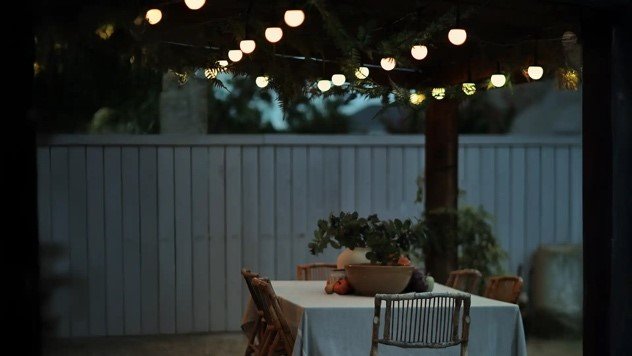
A few well-placed lights can make a home look finished after dark. A few poorly placed ones can do the opposite – harsh glare at the front walk, washed-out landscaping, and bright spots that still leave key areas in shadow. If you’re wondering how to plan landscape lighting, the goal is not to light everything. It’s to guide the eye, improve safety, and make your property feel intentional.
That starts with a plan, not a fixture catalog. The best landscape lighting designs are built around how your home looks from the street, how people move through the property, and what features deserve attention after sunset. When those pieces work together, the result feels polished instead of overdone.
Start With What You Want the Lighting to Do
Before choosing fixture styles or color temperatures, decide what success looks like for your property. Some homeowners want stronger curb appeal and a more welcoming front elevation. Others care most about safer walkways, better visibility around steps, and a backyard that stays usable after dark. Many want all three.
This matters because every lighting plan involves trade-offs. A dramatic look often uses tighter beams and stronger contrast. A softer, more natural effect relies on lower output and more restraint. If security is the priority, you may want broader coverage in side yards and around entries. If visual impact is the focus, accent lighting on trees, architectural details, and planting beds may do more than flooding the whole house with light.
For most homes, the smartest plan combines layered lighting. That means using different fixtures for different purposes instead of expecting one fixture type to handle everything.
How to Plan Landscape Lighting in Layers
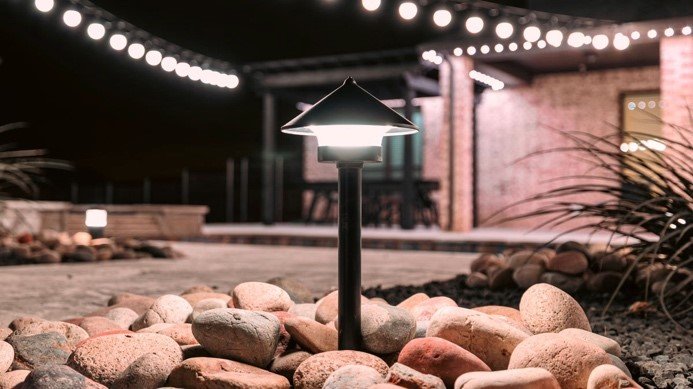
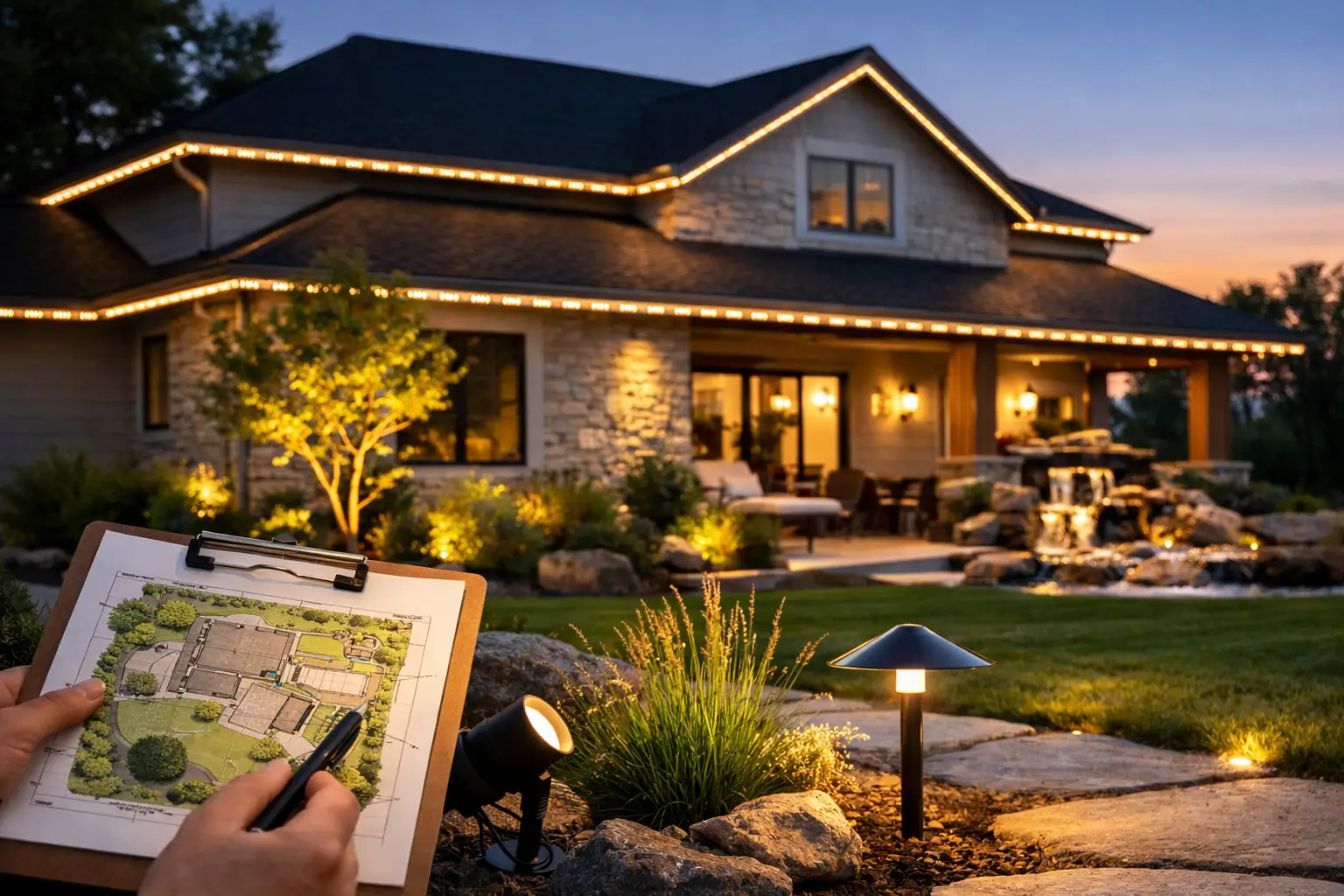
A strong outdoor lighting layout usually starts with three layers: path lighting, accent lighting, and area or functional lighting. Path lights help with wayfinding along walks and drive approaches. Accent lights highlight trees, stonework, columns, garden beds, or other focal points. Functional lighting supports entries, patios, seating areas, and transitions where people actually spend time.
The mistake many homeowners make is relying too heavily on path lights. A row of evenly spaced fixtures can help define a walkway, but if that is the only lighting on the property, the design tends to feel flat. The home itself disappears, and the landscape can look disconnected from the architecture.
Accent lighting adds depth. Uplighting a specimen tree, grazing a textured wall, or softly illuminating a planting bed creates a layered look that reads well from both the curb and the patio. Functional lighting keeps outdoor spaces useful without making them feel like a parking lot.
Walk the Property at Night Before You Design
Daytime planning helps, but nighttime observation tells the truth. Walk the front yard, side yard, and backyard after dark. Look for the places that already disappear, the areas that feel awkward to navigate, and the features that could look impressive with even a small amount of light.
Pay attention to sightlines. Where do you first see the house from the street? What stands out from the front door? What do you notice from inside looking out through windows in the evening? Good landscape lighting should improve those views, not compete with them.
This is also the right time to notice practical constraints. Mature trees may block certain beam paths. Low branches can catch light in a way that creates glare. Dense plant material may swallow small fixtures if they’re set too far back. Every property has these little realities, and they affect fixture placement more than most people expect.
Choose Focal Points, Not Every Feature
One of the best rules in landscape lighting is simple: not everything needs a spotlight. In fact, trying to light every tree, shrub, and garden bed usually makes the whole property less effective.
Pick a few focal points that anchor the design. That might be the front entry, a mature ornamental tree, stone columns, a retaining wall, or a water feature. These are the elements that give the property structure after dark. Secondary features can support them, but they should not all compete at the same brightness level.
A front yard, for example, may only need a cleanly lit walkway, two to four architectural accents on the home, and one or two landscape highlights to feel complete. The exact number depends on lot size, plant maturity, and how visible the home is from the street. Bigger properties usually need more fixtures, but not always more brightness.
Match the Fixture to the Job
The fixture type matters, but beam spread and placement matter even more. A narrow spotlight can create drama on a tall tree trunk or gable peak. A wider flood beam may work better across low foundation plantings or broader stone surfaces. Path lights are best used for gentle pools of light, not as mini floodlights.
This is where planning gets more technical. If a light is too bright for the application, it creates glare and wipes out contrast. If it is too weak, the feature disappears. If the beam is too wide, the light spills into windows, onto neighboring property, or across surfaces you never meant to highlight.
Professional installers spend a lot of time dialing in this balance because small changes make a big visual difference. Moving a fixture six inches, changing beam angle, or adjusting shield direction can be the difference between a clean effect and a distracting one.
Think About Color Temperature Early
Warm white is still the safest choice for most residential landscape lighting. It tends to flatter stone, brick, siding, and plant material while keeping the home inviting. Cooler white can feel sharper and more modern, but it can also make a property look stark if used without care.
If your home has warmer materials like natural stone, tan siding, red brick, or rich wood tones, warm lighting usually blends better. On cleaner contemporary exteriors with darker finishes, a slightly cooler tone may fit. It depends on the style of the house and the look you want at night.
Consistency matters too. Mixing noticeably different white tones across landscape fixtures, architectural lighting, and other permanent outdoor systems can make the design feel pieced together. If your property already has permanent roofline or patio lighting, the landscape plan should complement it.
Plan for Growth and Maintenance
A landscape lighting design is never interacting with a fixed environment. Plants grow. Trees fill out. Mulch gets refreshed. Beds get re-edged. That means a layout that looks perfect in year one may need small adjustments later.
When planning fixture locations, think ahead. A young shrub may be the right height today but can block a beam in two seasons. Ground fixtures near bed edges may shift during maintenance. Some materials hold up better than others, and some installation methods make future service much easier.
This is one reason custom planning matters. A dependable system should not just look good the day it goes in. It should be designed so it can be maintained, adjusted, and expanded as the property changes.
Don’t Ignore Safety and Usability
The most beautiful lighting plan still has to work for real life. Front steps, grade changes, side yard gates, and transitions from patios to lawn areas need enough light to move confidently. That does not mean overlighting them. It means lighting them clearly.
Entries deserve special attention because they serve both function and appearance. A front door should feel welcoming, easy to approach, and visually connected to the rest of the home. Back patios and entertainment areas should have enough light for conversation and movement without turning the whole space overly bright.
If children, guests, or older family members use the yard often, practical visibility should carry more weight in the plan. A softer design can still be safe, but it takes careful fixture selection and placement to pull that off well.
Why Professional Design Often Pays Off
Homeowners can absolutely sketch ideas and identify priorities, but translating those ideas into a balanced nighttime design is where experience shows. Landscape lighting is one of those projects that looks simple from a distance and gets more detailed the closer you get.
Voltage planning, fixture spacing, beam control, glare management, and long-term serviceability all affect the final result. So does installation quality. A well-designed system should feel clean in the daytime and impressive at night, with wiring, transformer placement, and fixture aiming handled professionally.
For homeowners who want a tailored result instead of a one-size-fits-all package, working with a local team can save time and frustration. Hamilton Home Accents approaches landscape lighting the same way we approach other exterior upgrades – with custom design, certified installation, and a focus on visible quality that lasts.
A Better Way to Plan Landscape Lighting
If you’re serious about how to plan landscape lighting, start by deciding what the property needs most after dark. Then build around focal points, layer the lighting, and stay disciplined about brightness. The homes that look best at night are rarely the brightest ones. They are the ones where every fixture has a purpose.
A good lighting plan should make your home feel more inviting the moment the sun goes down. When it is designed thoughtfully, you do not just notice the fixtures. You notice the house, the landscape, and the care behind both.