A permanent lighting system should make your life easier, not give you one more thing to worry about every season. If you’re wondering how to maintain permanent roofline lights, the good news is that most systems need very little attention when they were installed correctly in the first place. A little routine care goes a long way toward keeping the color consistent, the controls responsive, and the overall look of your home clean and polished year-round.
That matters because roofline lighting sits in one of the toughest spots on your property. It faces sun, wind, rain, snow, pollen, and temperature swings, all while staying visible from the street. When maintenance gets ignored, the first signs are usually subtle – one section looks dimmer, a few lenses collect grime, or a schedule stops running the way it should. Catching those small issues early is usually the difference between a quick adjustment and a more expensive service call.
How to maintain permanent roofline lights without overdoing it
Most homeowners do not need a complicated maintenance routine. In fact, too much handling can create problems that were not there before. The goal is to inspect thoughtfully, clean gently, and leave technical repairs to a qualified installer when needed.
A good rule of thumb is to check your system at the change of each season. In Northwest Ohio and Southeast Michigan, that timing makes sense because spring pollen, summer storms, fall debris, and winter freeze-thaw cycles all affect exterior systems differently. If your lights are used heavily for holidays, game days, or year-round accent lighting, a quick mid-season check is smart too.
From the ground, look for uneven brightness, sections that are not responding to color changes, visible dirt buildup, or wiring that appears loose near soffits and trim. You are not trying to diagnose every technical issue. You are simply looking for changes from the way the system normally performs.
Start with gentle cleaning
The most common maintenance task is also the simplest. Dirt, dust, spider webs, and pollen can collect around light housings and tracks over time. That buildup can dull the appearance of the lights even when the LEDs themselves are working perfectly.
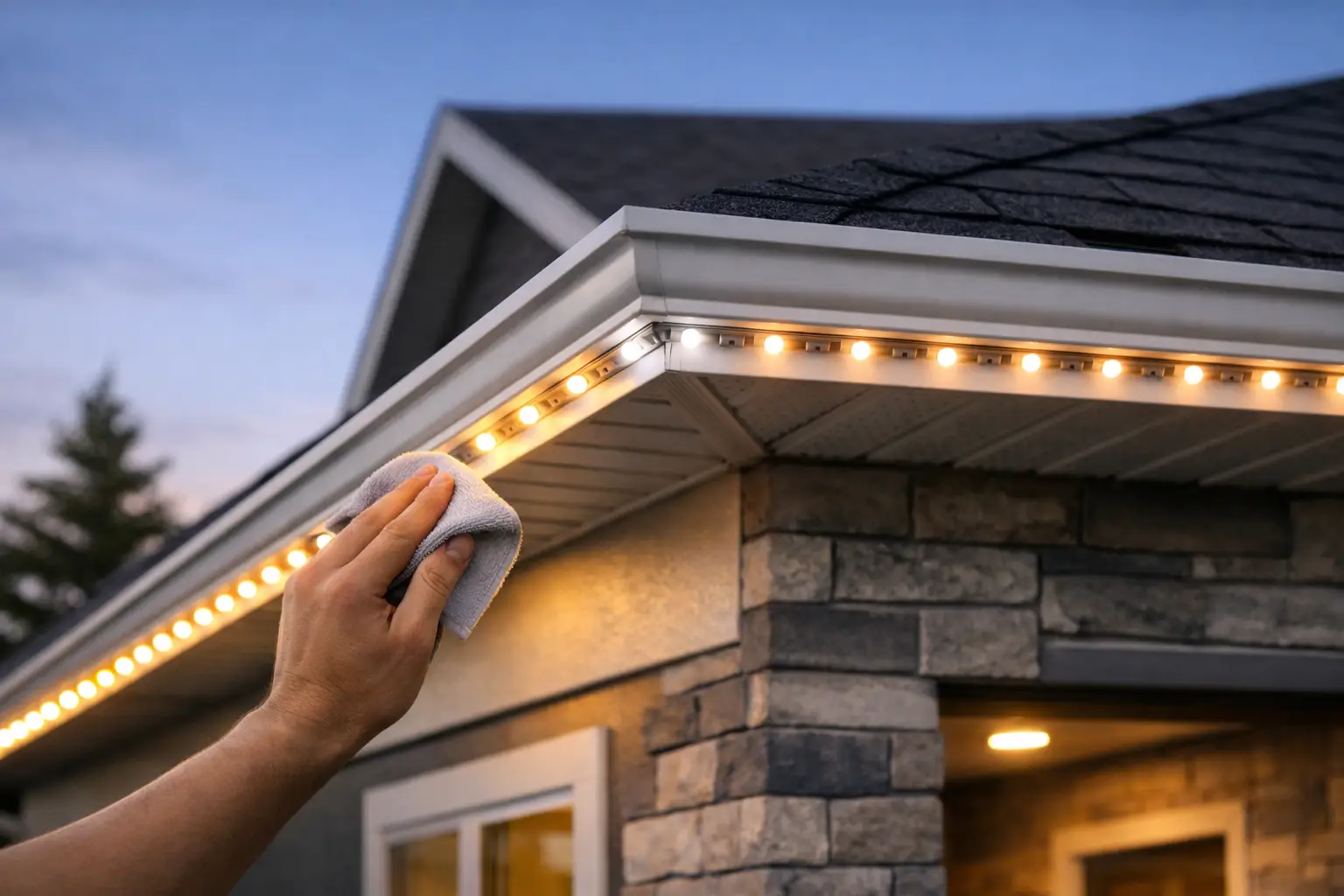
For most systems, gentle cleaning from the ground or from a stable ladder used with proper safety precautions is enough. A soft cloth or microfiber towel lightly dampened with water will usually handle surface grime. If there is heavier buildup, a mild soap solution can help, but harsh chemicals should stay off the roofline. Strong cleaners can damage finishes, cloud lenses, or affect adhesives and gaskets depending on the product used.
Pressure washing is usually a bad idea around permanent lighting. It can force water into places it does not belong and may loosen mounting components. If your soffits or gutters are being professionally cleaned, make sure the crew knows there is a permanent lighting system installed so they can work around it carefully.
Keep debris from becoming a bigger problem
Leaves and small twigs do more than make a roofline look messy. They can trap moisture around lighting components and make inspections harder. Gutters that overflow can also send water where it should not go, increasing wear on nearby trim and mounting surfaces.
That does not mean the lights themselves are failing. It means the surrounding exterior conditions matter. Keeping gutters clean and trimming back branches that rub or hang too close to the roofline helps protect the system over time. This is one reason many homeowners appreciate working with a company that understands both lighting and exterior upkeep – the best-looking results usually come from treating the whole exterior as one system, not a collection of separate tasks.
Check your app, controller, and settings
When people think about maintaining permanent roofline lights, they often focus only on the hardware. The software side matters too. If your system uses an app, controller, or smart scheduling feature, take a few minutes each season to make sure everything is current and functioning the way you expect.
Test a few saved scenes. Confirm your timers are accurate after daylight saving time changes. Check whether the app has firmware updates or controller updates available. Sometimes what looks like a lighting problem is really a settings issue, a weak connection, or a schedule that was accidentally changed.
If your lights stop responding entirely, do not assume the worst. Start with the basics. Confirm power is on, the controller has not been reset, and your home network is working if the system depends on Wi-Fi. Some troubleshooting is simple. Some is not. The key is knowing when to stop before turning a minor issue into a bigger one.
Watch for signs of wear after storms
Strong wind, hail, ice, and heavy snow can put stress on any exterior product. After a major weather event, it is worth doing a visual check even if the lights still turn on.
Look for shifted tracks, dangling wires, cracked housings, or areas where moisture appears trapped. Also pay attention to your fascia, soffits, and gutters. Sometimes the lighting components are fine, but the surface they attach to has taken the hit. If the mounting area is damaged, the lighting system may need adjustment after the exterior repair is completed.
This is where professional installation pays off. A certified, properly mounted system is built to handle everyday weather much better than temporary solutions or rushed installs. Even so, no exterior product is completely immune to severe conditions. Fast attention after a storm can prevent secondary damage.
Know what not to do
There are a few maintenance mistakes homeowners make with the best intentions. The first is using abrasive pads or strong solvents to remove dirt. The second is trying to pry open or reseal components without understanding the manufacturer’s design. The third is pulling on loose sections instead of having them evaluated.
Another common mistake is ignoring one small outage because the rest of the system still works. One dim section or an occasional flicker may not seem urgent, but it can point to a connection issue, moisture intrusion, or a component starting to fail. These are usually easier to address early.
If your system is a premium product such as JellyFish Lighting or Govee permanent outdoor lighting, the maintenance approach may vary slightly by model and installation method. That is another reason to follow the care guidance provided by your installer rather than relying on generic advice from unrelated systems online.
When to call for professional service
Some situations call for more than routine upkeep. If multiple sections are out, the controller repeatedly drops connection, colors are inconsistent in one run, or you see physical damage near wiring or mounting points, it is time to bring in a pro.
The right service visit should not feel like guesswork. A qualified team can inspect the full system, test connections, identify whether the issue is electrical, structural, or software-related, and make repairs that preserve both appearance and performance. For homeowners who want the convenience permanent lighting was supposed to deliver in the first place, that kind of support matters.
It is also worth calling a professional if you are planning exterior work near the system. New gutters, fascia repairs, roof replacement, painting, or soffit work can all affect mounted lighting. Coordinating those projects helps avoid accidental damage and unnecessary reinstall costs.
How to make your system last longer
The best long-term care is simple consistency. Use your lights as intended, keep the surrounding exterior maintained, and do not wait too long when something changes. Permanent roofline lights are designed for durability, but longevity still depends on installation quality, weather exposure, usage patterns, and how quickly small issues are handled.
Homes with mature trees may need more frequent cleaning because of sap, pollen, and debris. Homes in newer developments may deal more with dust and wind exposure. Commercial properties that run lighting displays more often may naturally need more attention than a residential system used only on weekends and holidays. There is no single maintenance schedule that fits every property.
That is why local experience matters. A lighting company that understands regional weather and common exterior conditions can usually spot patterns faster and recommend practical maintenance instead of one-size-fits-all advice. At Hamilton Home Accents, that hands-on approach is part of what homeowners value – not just an attractive installation, but support that helps it stay that way.
Permanent roofline lighting should keep your home looking sharp through every season, not become another chore on your list. A few careful checks, gentle cleaning, and timely service when needed are usually all it takes to protect the investment and enjoy the result the way you planned to from day one.