A set of pathway lights from the hardware store and a fully customized permanent roofline system might both count as outdoor lighting, but they live in completely different price ranges. If you are wondering how much outdoor lighting costs, the honest answer is that it depends on what you want the lighting to do – add curb appeal, improve safety, create year-round color, or handle all three at once.
For most homeowners, price comes down to three things: the type of system, the size of the property, and whether the installation is temporary, standard, or permanent. That is why one home may need a few hundred dollars in simple upgrades while another invests several thousand in a professionally installed system built to last.
How much outdoor lighting costs by project type
The fastest way to understand outdoor lighting pricing is to separate it by use. The budget for a few accent lights around a front walk is very different from the budget for a permanent lighting system that runs along the roofline and patio.
Basic solar or plug-in lighting
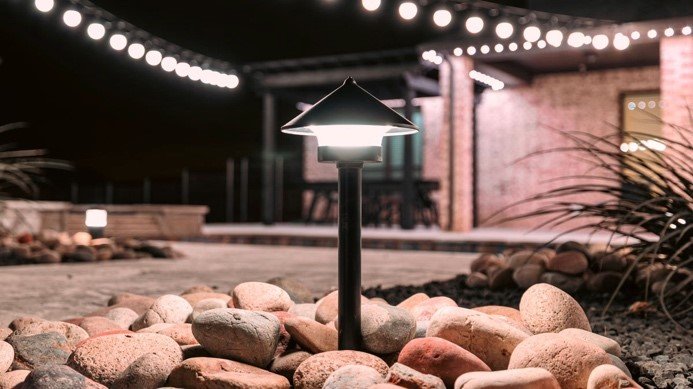
If you are taking the DIY route, basic solar stake lights or plug-in fixtures are usually the lowest-cost option. A small set might run from $50 to $300, depending on the number of lights and overall quality. These products can help with visibility and add a little style, but they often fall short on brightness, longevity, and consistency.
This is the budget-friendly entry point, but it usually comes with trade-offs. Plastic housings fade, batteries weaken, and uneven performance becomes more noticeable after one or two seasons.
Low-voltage landscape lighting
Professionally installed low-voltage landscape lighting typically starts around $1,500 to $3,500 for a modest front-yard layout. A more developed design with path lights, uplighting on architectural features, and lighting around landscape beds often lands between $3,500 and $7,500 or more.
This category usually includes fixtures, wire runs, transformer setup, placement planning, and installation labor. If a property has mature trees, layered planting beds, stonework, or a long walkway, the total tends to rise because the design takes more material and more labor.
Patio and outdoor living lighting
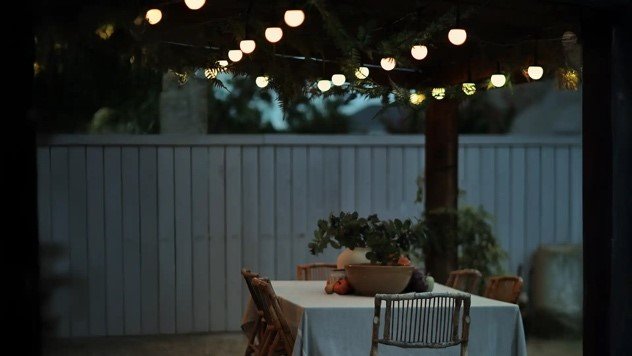
Lighting for patios, pergolas, seating areas, and outdoor kitchens can range widely. A simple bistro-light setup may cost a few hundred dollars, while integrated lighting for a finished outdoor living space can run from $2,000 to $6,000 or more.
The price depends on mounting points, power access, weather-rated components, and whether the lights are meant for ambiance only or for functional use after dark. Good patio lighting is not just decorative. It changes how often people actually use the space.
Permanent outdoor lighting systems
Permanent lighting is where many homeowners start comparing cost more seriously. Professionally installed permanent systems – especially those designed for rooflines, accent zones, and year-round control – often start around $3,000 to $5,000 for smaller homes and can reach $7,000 to $15,000 or more for larger or more complex properties.
That price usually reflects much more than the lights themselves. You are paying for custom layout, color control, discreet installation, power integration, app functionality, and a system intended to stay in place through every season. For homeowners who are tired of hanging holiday lights, paying for repeated seasonal installs, or dealing with tangled storage bins, permanent lighting can make financial sense over time.
What changes the price the most
When homeowners ask how much outdoor lighting costs, they are often really asking what drives the estimate up or down. A few factors matter more than others.
Home size and roofline complexity
A straightforward roofline on a smaller home costs less than a large house with multiple peaks, dormers, garage sections, and architectural breaks. More corners and elevation changes mean more custom fitting, more labor, and more planning.
The same goes for landscape lighting. A compact front yard with one walkway is much simpler than a property with long beds, rear entertaining areas, trees, and detached features.
Fixture quality
Not all outdoor lighting products are built the same. Lower-cost fixtures may look fine on day one, but fading finishes, water intrusion, and early LED failure can make them more expensive in the long run. Higher-quality systems cost more upfront because they are designed for weather exposure, better light output, and longer performance.
For permanent lighting, product quality matters even more. Homeowners are not just buying color effects. They are buying durability, cleaner installation, and dependable control.
Custom design
There is a difference between placing lights and designing with light. A custom plan that highlights architecture, balances brightness, avoids glare, and fits the home naturally will usually cost more than a basic layout. It also tends to look far better.
That is one reason quote-driven projects vary so much. Two homes with similar square footage can end up at different price points if one owner wants a simple result and the other wants a polished, layered look.
Electrical access and installation conditions
If power is easy to access and the work area is straightforward, installation is quicker. If crews need to work around difficult elevations, limited access, hardscapes, mature landscaping, or added electrical requirements, the price can increase.
This is where professional site evaluation matters. Online estimates can be helpful for ballpark planning, but they rarely account for the details that shape the real project cost.
Permanent lighting vs seasonal lighting costs
This is one of the most common comparisons homeowners make, and it is a fair one. Seasonal holiday lighting often feels more affordable because the cost is spread out year by year. But over several seasons, the total can add up quickly.
A seasonal install may include design, installation, takedown, and storage support, and pricing often depends on roofline length and complexity. For homeowners who decorate every year, especially on larger homes, those recurring costs can start to look a lot like financing a permanent solution without keeping the long-term value.
Permanent systems such as Jellyfish Lighting or Govee permanent outdoor lighting cost more upfront, but they stay in place and can be used far beyond the holidays. That means one system can cover Christmas, game days, birthdays, patriotic displays, everyday curb appeal, and subtle accent lighting the rest of the year.
For many households, the real question is not just installation cost. It is whether they want to keep paying for ladders, labor, replacement strands, and annual scheduling.
What homeowners in our area usually prioritize
In communities around Perrysburg, Sylvania, Maumee, and the broader Northwest Ohio and Southeast Michigan market, most property owners are not looking for outdoor lighting just to check a box. They want the home to look sharper, feel safer, and stand out for the right reasons.
That usually leads to one of two paths. Some want a clean landscape lighting plan that improves nighttime visibility and highlights the home’s best features. Others want permanent lighting because they are ready for a year-round system that eliminates the seasonal hassle and gives them more flexibility.
Both are valid. The better choice depends on whether your priority is subtle architectural lighting, event-ready color control, or a mix of both.
Is professional outdoor lighting worth the cost?
If the goal is a polished, durable result, professional installation is usually worth it. DIY options can work for simple needs, but they often struggle with consistency, lifespan, and appearance. Crooked lines, visible wires, weak brightness, and unreliable controls are common issues.
Professional installation also helps protect the look of the home. That matters with permanent systems, where the lighting needs to blend into the structure during the day and perform reliably at night. A certified, licensed, and insured installer brings accountability that a box-store solution does not.
For homeowners investing in exterior upgrades, lighting works best when it is treated as part of the property’s overall presentation, not as an afterthought. It can support landscaping, highlight stonework, improve walkways, and make outdoor living spaces more usable.
A smart way to budget for outdoor lighting
Start by deciding what success looks like. If you only want a safer front walk, your budget will be much lower than if you want full roofline lighting, backyard ambiance, and app-based color control.
From there, think in phases if needed. Many homeowners begin with the front elevation or a key entertaining area and expand later. That approach keeps the project manageable without sacrificing quality.
It also helps to compare cost against repeat spending. If you already pay for seasonal lighting every year or replace low-quality fixtures often, a better system may cost less than you think over time. At Hamilton Home Accents, that is often where the conversation shifts – from upfront price to long-term value, appearance, and convenience.
The best estimate is one based on your home, your goals, and the level of finish you want. Outdoor lighting can be modest, dramatic, or somewhere in between, but when it is designed well, it does more than light up the house. It changes how the property feels every time you pull into the driveway.